

You can significantly enhance your Forex trading strategy by effectively utilizing the Relative Strength Index (RSI). This powerful RSI Forex Indicator helps you identify overbought or oversold market conditions, allowing you to make informed trading decisions. By understanding how to interpret RSI values, you can increase your chances of executing profitable trades while minimizing risks. In this article, we will guide you through the vital steps to leverage the RSI effectively, ensuring that you navigate the Forex market with confidence and authority.

Key Takeaways:
- Understanding the RSI Forex Indicator: The Relative Strength Index is a momentum oscillator that measures the speed and change of price movements, helping traders identify overbought or oversold conditions.
- Interpreting RSI Values: RSI values range from 0 to 100, with readings above 70 indicating overbought conditions and below 30 indicating oversold conditions. This can signal potential reversal points.
- Integrating RSI into Your Forex Trading Strategy: Use RSI in conjunction with other technical analysis tools to confirm trends and signals, enhancing the effectiveness of your trades.
- Divergence Analysis: Observing divergences between price action and RSI can provide insights into potential trend reversals. Look for discrepancies that suggest weakening momentum.
- Time Frame Considerations: Different time frames can yield different RSI signals. It’s important to align the RSI readings with your trading time frame for better accuracy.
- Risk Management Practices: Always incorporate risk management strategies, such as stop-loss orders, when using the RSI to ensure profitable trades while mitigating potential losses.
- Practice and Adaptation: Successful trading with the RSI requires practice and adaptation; test different strategies in a demo account to refine your approach before trading live.
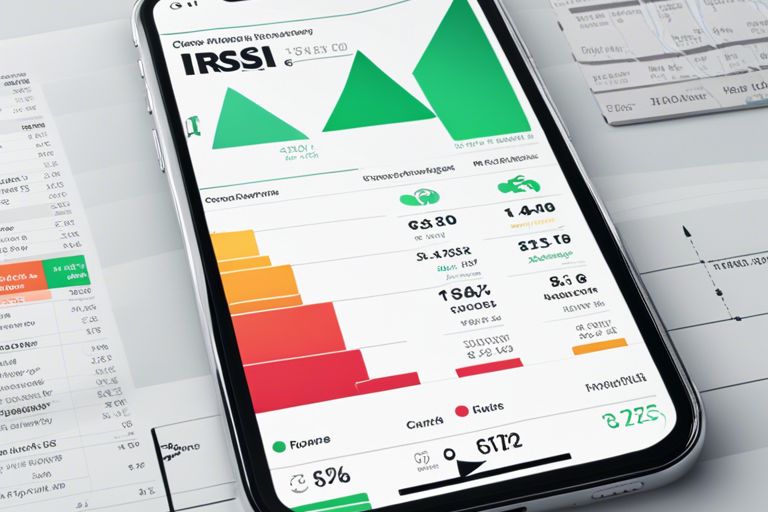
Understanding the Relative Strength Index (RSI)
While trading in the Forex market, understanding the tools at your disposal is crucial for developing a successful trading strategy. One of the most popular tools is the Relative Strength Index (RSI), an invaluable indicator that can help you make informed decisions and enhance your trading performance.
Definition of the RSI
Definition: The Relative Strength Index (RSI) is a momentum oscillator that measures the speed and change of price movements. It ranges from 0 to 100 and is primarily used to identify overbought or oversold conditions in a market, aiding traders in determining potential reversal points.
History and Development of the RSI
Any method of analysis is often enriched by its background, and the RSI is no exception. Developed by J. Welles Wilder Jr. and introduced in his 1978 book, “New Concepts in Technical Trading Systems,” the RSI has since become a cornerstone of technical analysis and a widely utilized Forex trading strategy.
With its introduction, the RSI brought a fresh perspective to market analysis. Wilder designed it as a tool to evaluate buying and selling pressure, which eventually gained traction among traders for its simplicity and effectiveness. Over the years, it has evolved and been integrated into numerous trading platforms, making it accessible to both novice and expert traders alike.
Calculation of the RSI
On a fundamental level, to calculate the RSI, you need to consider the average gains and losses over a specified period, usually 14 days. The RSI formula is computed as: RSI = 100 – (100 / (1 + RS)), where RS is the average of the gains divided by the average of the losses.
Another crucial aspect to consider is that the RSI calculation is based on closing prices, making it sensitive to recent price movements. By examining a combination of average gains and losses, you can gauge market momentum more effectively, enabling you to identify periods of potential market reversals with greater accuracy.
Interpretation of RSI Values
Values of the RSI provide insight into market conditions. An RSI above 70 generally indicates that an asset is overbought, while an RSI below 30 signifies that it is oversold. These thresholds can serve as potential signals for you to reconsider your trading strategy.
Understanding the implications of these values is vital for your trading strategy. For example, when the RSI approaches the overbought or oversold levels, it can indicate an impending price correction. However, be cautious, as false signals can occur, and it is wise to use additional indicators for confirmation before making trading decisions.
The Importance of RSI in Forex Trading
Some traders often underestimate the power of the Relative Strength Index (RSI) in crafting a solid Forex trading strategy. This technical indicator assists you in making informed trading decisions by analyzing market momentum and identifying potential entry and exit points. Utilizing the RSI effectively can substantially enhance your trading performance and profitability.
Identifying Overbought and Oversold Conditions
On the RSI scale, readings above 70 indicate an overbought condition, suggesting that a currency pair may be primed for a price correction. Conversely, readings below 30 signal an oversold state, implying potential upside movement. By recognizing these thresholds, you can strategically time your trades to maximize your profits.
Trend Strength Indicators
Trend strength is crucial in determining whether you should follow the current market direction or hold off.
Strength of the RSI provides valuable insights into the momentum of the trend. When the RSI consistently remains above 50 during an uptrend or below 50 in a downtrend, it reinforces the strength of the current market direction. This information enables you to make better-informed decisions about when to enter or exit trades, ensuring that you capitalize on profitable trends while minimizing losses.
Risk Management through RSI
Importance of using the RSI for risk management cannot be overstated. By incorporating the RSI into your trading strategy, you can better identify potential risk factors associated with your trades.
Overbought conditions often suggest that a market reversal is imminent, allowing you to exit positions before significant losses occur. Similarly, understanding oversold signals helps you recognize potential buy opportunities while staying aware of the risks involved. By utilizing the RSI as part of your risk management strategy, you not only protect your capital but also enhance your ability to make more profitable trades in the Forex market.
Setting Up the RSI for Trading
Once again, it is important to understand how to effectively set up the Relative Strength Index (RSI) to optimize your trading strategy. Proper setup can significantly enhance your trading decisions and potentially increase your profitability in the forex market.
Choosing the Right Time Frame
Trading in the right time frame is crucial when using the RSI Forex Indicator. You can select from different time frames—such as 1-minute, 5-minute, or daily charts—based on your trading style. If you are a day trader, shorter time frames like 5 or 15 minutes may be more beneficial, while swing traders might find daily or weekly charts more suitable for their strategies.
Configuring RSI Settings
Time to adjust the RSI settings to fit your trading strategy. The standard setting for the RSI is 14 periods, but you may choose to customize it based on your preferences and specific market conditions. You can adjust it to a shorter period to react more quickly to price movements or lengthen it for a smoother, less volatile indicator.
It is advisable to keep the default setting of 14 in most cases since it provides a balanced view of the market’s momentum. However, monitor the RSI’s behavior closely and adjust it as necessary to align with your Forex Trading Strategy. For instance, a setting of 9 periods can help capture shorter trends, while 21 periods can denote longer trends, providing you with different perspectives on relative strength.
Combining RSI with Other Technical Indicators
Combining the Relative Strength Index with other technical indicators can enhance your analysis. By using complementary tools such as moving averages or MACD, you can increase the reliability of your signals and confirm potential trade entries or exits. This integrated approach allows for a more comprehensive view of the market dynamics.
Technical indicators such as moving averages can help you identify the overall trend, while the RSI can indicate whether the market is overbought or oversold. Using both together could offer you a clearer picture, enabling you to make informed decisions in your trading activities. Remember to test various combinations so you find the most effective strategy for your personal trading style.
Strategies for Using the RSI in Forex Trading
Not every trading strategy is the same, and the Relative Strength Index (RSI) offers various approaches that can suit your trading style. Here are some effective strategies to incorporate the RSI into your Forex trading plans.
Basic RSI Trading Strategy
One of the simplest methods to use the RSI Forex Indicator is to watch for overbought and oversold levels. Typically, an RSI above 70 indicates that an asset might be overbought, while an RSI below 30 signals potential oversold conditions. When the RSI reaches these extremes, you could consider entering a trade against the prevailing trend as a reversal opportunity.
Divergence Trading with RSI
To capitalize on divergence, you should look for discrepancies between the price action of an asset and the RSI. When the price makes a new high or low that the RSI does not confirm, it signifies potential market reversals, presenting trading opportunities.
Trading divergence can be particularly powerful in Forex trading, as it helps you identify hidden shifts in market momentum. For example, if the price hits a new peak but the RSI shows a lower high, this negative divergence suggests that the buying pressure is weakening. Thus, entering a short position at this point could lead to profitable trades as the market corrects. However, be cautious—divergence alone does not guarantee a reversal and should be used in conjunction with other factors.
RSI and Trend Following Strategies
Trading with the trend using the RSI requires you to identify the overall market direction. An RSI reading between 40 and 60 usually indicates a strong trend. When the RSI moves above 60, it adds confirmation to a bullish trend, while a drop below 40 supports a bearish trend.
Strategy-wise, you should primarily focus on trades that align with the long-term trend. For instance, in a bullish market, seek long positions when the RSI dips below 40 and then recovers above it. This approach minimizes risk by ensuring that you are trading in the direction of the market momentum. Always remember that combining the RSI with other indicators can enhance your trading decisions and provide better entry and exit signals.
Common Mistakes to Avoid with RSI
Unlike many traders who rely heavily on the Relative Strength Index (RSI), it’s crucial to understand the potential pitfalls that can lead to costly mistakes.
Misinterpreting Overbought and Oversold Signals
Common mistakes happen when you forget that an overbought condition (above 70) doesn’t always indicate an imminent price drop, just as an oversold condition (below 30) doesn’t guarantee a price rise. Markets can remain overbought or oversold for extended periods, leading to false signals.
Relying Solely on RSI for Trading Decisions
Trading decisions should not solely rest on the RSI; this is a common error. The RSI is a valuable tool, but using it in isolation can lead to missed opportunities and increased risk. Integrate it with additional indicators or chart analysis to strengthen your strategy.
Avoid placing trades based exclusively on the RSI readings. The indicator provides insights into momentum, but it does not account for market trends, potential news events, or other influences that could affect price movements. Incorporating a broader analysis will enhance your trading decisions.
Failing to Consider Market Context
With the RSI, it’s easy to get lost in the numbers without considering the broader market context. Ignoring fundamental or technical factors can lead to misguided trades.
Failing to account for the overall market conditions can make your RSI analysis ineffective. For instance, during strong market trends, overbought or oversold signals might not hold the same weight as they do in choppy markets. Always incorporate the bigger picture into your trading strategy for more successful outcomes.
Advanced Techniques for RSI Traders
For those looking to enhance their trading performance, utilizing advanced techniques with the Relative Strength Index (RSI) can significantly improve your strategies. Below are some vital approaches to leverage the RSI in your trading.
- Understanding RSI Divergence
- Incorporating RSI with Support and Resistance Levels
- RSI and Trend Confirmation
- Using RSI in Conjunction with Other Indicators
| Technique | Description |
| Understanding RSI Divergence | Identifying divergences helps you spot potential trend reversals. |
| Incorporating RSI with Support and Resistance Levels | Combining these analyses can enhance entry and exit points. |
| RSI and Trend Confirmation | Using RSI to verify the strength of a current trend supports your trades. |
| Using RSI in Conjunction with Other Indicators | Integrating RSI with other technical indicators can provide a clearer market picture. |
RSI Variations and Modifications
Techniques like modifying the RSI to suit your trading style can yield improved results. For example, adjusting the RSI period can help tailor the indicator for more sensitivity in volatile markets. You may also consider different thresholds to better reflect your unique trading approach.
Multi-Time Frame Analysis with RSI
Modifications of your analysis methodology can lead to greater foresight in trade execution. By applying the RSI across various time frames, you can better recognize potential entry and exit points. This strategy allows you to align your trades with the broader market direction while capitalizing on shorter-term price actions.
With multi-time frame analysis, you can achieve a comprehensive view of the market. By assessing the RSI on different time scales—like daily, hourly, and fifteen minutes—you can determine the strength of a trend, capture entry signals, and identify overbought or oversold conditions more accurately, enhancing the probability of successful trades.
Automated Trading Systems Using RSI
Advanced automated trading systems can utilize the RSI for executing trades based on pre-defined criteria. This allows you to harness the power of the RSI without constant monitoring, enabling efficient trading that capitalizes on market fluctuations.
MultiTime systems designed around the RSI can analyze vast amounts of data, spotting opportunities faster than manual trading could ever allow. With a well-programmed strategy, you can set your trades to act on specific RSI conditions, which can maximize your potential returns while reducing emotional decision-making during trading.
Keep in mind that while automated systems can boost your trading efficiency, they should be regularly reviewed and adjusted to align with current market conditions. Always ensure proper back-testing of your strategies to mitigate risks and enhance reliability.
To wrap up
Following this guide, you can effectively leverage the Relative Strength Index (RSI) to enhance your Forex trading strategy. By understanding how to identify overbought and oversold conditions, you can make informed trading decisions that maximize your chances of success. Remember to incorporate RSI signals with other technical indicators for a more robust analysis, and always practice sound risk management in your trades. With patience and practice, you can utilize the RSI Forex Indicator to increase your profitability in the dynamic world of Forex trading.
FAQ
Q: What is the Relative Strength Index (RSI) in Forex trading?
A: The Relative Strength Index (RSI) is a momentum oscillator that measures the speed and change of price movements. It ranges from 0 to 100 and is typically used to identify overbought or oversold conditions in a currency pair. An RSI value above 70 indicates that the market may be overbought, while a value below 30 signals that it may be oversold. Forex traders use this indicator to make informed trading decisions and manage their risk effectively.
Q: How do you calculate the RSI?
A: The RSI is calculated using the following formula: RSI = 100 – (100 / (1 + RS)), where RS (Relative Strength) is the average of ‘n’ days’ up closes divided by the average of ‘n’ days’ down closes. While the standard period for calculation is 14 days, traders can adjust this to suit their trading strategy. The calculated RSI values determine whether the asset is overbought or oversold.
Q: How can the RSI be used to identify trading opportunities?
A: Traders look for RSI divergence, overbought, or oversold levels to identify potential trading opportunities. For instance, if the RSI indicates that a currency pair is overbought, traders may consider selling or closing long positions. Conversely, if it shows an oversold condition, it may present a buying opportunity. Additionally, using RSI in conjunction with other indicators can enhance the accuracy of trading signals.
Q: What are some common RSI trading strategies?
A: Common RSI trading strategies include: 1. Overbought/Oversold Strategy: Buying when the RSI drops below 30 and selling when it rises above 70. 2. Divergence Strategy: Trading based on divergence between the RSI and price movements. 3. Trend Confirmation: Using RSI to confirm trends by observing whether the RSI stays above 50 (uptrend) or below 50 (downtrend). These strategies help traders align their trades with market conditions.
Q: What are the limitations of using the RSI in Forex trading?
A: Although the RSI is a useful indicator, it has limitations. It may provide false signals, particularly in strong trending markets where prices can remain overbought or oversold for extended periods. Additionally, RSI does not indicate strength or direction of price movement on its own; hence, it is vital to use it in conjunction with other technical analysis tools and risk management techniques.
Q: How can I use the RSI to manage my risk in Forex trading?
A: To manage risk using the RSI, traders can set stop-loss orders based on overbought and oversold levels. For example, if entering a buy order when the RSI indicates an oversold condition, traders can set a stop-loss just below the recent low. Additionally, traders should consider their position size and the overall market environment to ensure that they do not expose themselves to unnecessary risks.
Q: Where can I find the RSI indicator on trading platforms?
A: The RSI indicator is commonly found in most Forex trading platforms, like MetaTrader 4 or 5, TradingView, and others. Traders can typically access it from the indicators section by searching for “Relative Strength Index.” After adding it to the chart, the settings can be adjusted based on individual preferences or trading strategies.
Other Analysis Today